
Daily Dog Care: The Complete Guide to Raising a Healthy, Happy Dog

Caring for your dog goes far beyond food and shelter. A structured daily dog care routine supports your dog’s physical health, emotional stability, and long-term well-being. Whether you’re a first-time dog parent or looking to improve your pet care habits, this comprehensive guide covers everything you need to know about daily dog care—from feeding and exercise to grooming, mental stimulation, and preventive health.
Daily Dog Care Routine – Everything Your Dog Needs Every Day
Dogs thrive on consistency. A predictable routine reduces anxiety, improves behavior, and strengthens the bond between you and your pet. When your dog knows what to expect each day, they feel safe, secure, and confident.
Let’s break down the essential components of a well-balanced daily dog care schedule.
Morning Dog Care Routine
Starting the day right sets the tone for your dog’s energy, mood, and digestion.
1. Fresh Water and a Nutritious Breakfast
Hydration is critical. Every morning:
- Wash and refill the water bowl with clean, fresh water
- Feed a high-quality dog food appropriate for your dog’s age, size, and activity level
- Monitor appetite and eating speed
Feeding Guidelines:
- Puppies: 3–4 meals per day
- Adult dogs: 2 meals per day
- Senior dogs: 2 smaller, easy-to-digest meals
Look for balanced nutrition that includes protein, healthy fats, fiber, vitamins, and minerals. Avoid overfeeding, as obesity is one of the most common health issues in dogs.

2. Morning Exercise and Potty Break
Dogs need daily physical activity to maintain a healthy weight and prevent behavioral issues.
Recommended Exercise Time:
- Small or low-energy breeds: 20–30 minutes
- Medium breeds: 30–60 minutes
- High-energy breeds: 60+ minutes
Morning walks allow your dog to:
- Burn off excess energy
- Explore scents (important mental enrichment)
- Maintain healthy digestion
- Practice leash training and obedience
Pro Tip: Let your dog sniff during walks. Sniffing stimulates their brain and reduces stress.

Daily Grooming and Hygiene Care
Grooming isn’t just about appearance—it’s essential for health.
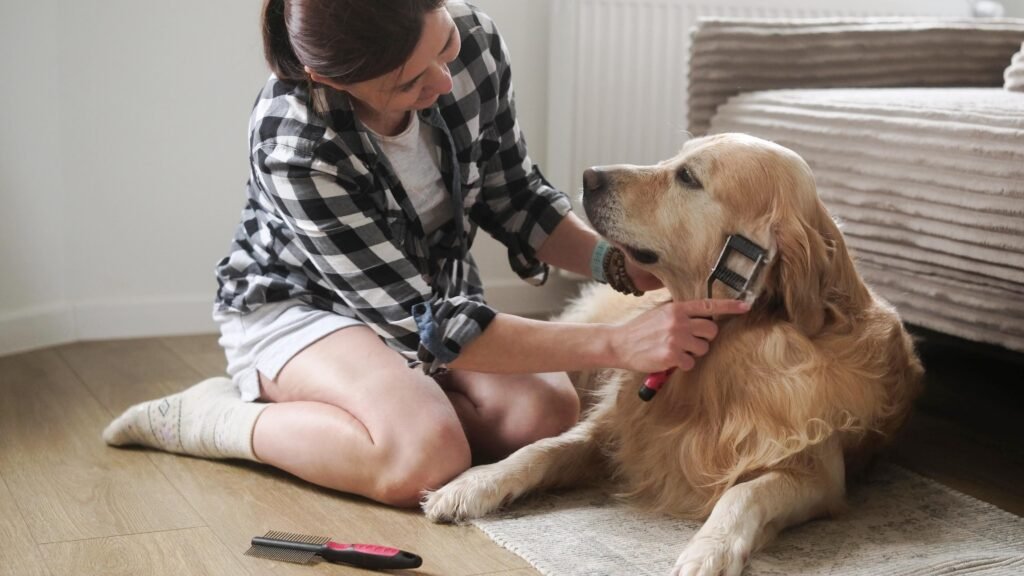
3. Brushing the Coat
Brushing removes loose fur, dirt, and debris while distributing natural skin oils.
Benefits of Daily or Regular Brushing:
- Reduces shedding
- Prevents painful matting
- Improves circulation
- Helps detect skin problems early
Long-haired breeds may require daily brushing, while short-haired dogs may need it 2–3 times per week.
4. Eye, Ear, and Skin Checks
A quick daily inspection can prevent infections.
Check for:
- Redness or discharge in eyes
- Bad odor or wax buildup in ears
- Dry, flaky, or irritated skin
- Lumps, bumps, or parasites
Catching problems early reduces vet bills and discomfort for your dog.
5. Dental Care and Oral Hygiene
Dental disease affects many adult dogs, yet it’s often overlooked.
Daily or regular dental care includes:
- Brushing with dog-safe toothpaste
- Providing dental chews
- Monitoring for bad breath or swollen gums
Healthy teeth prevent pain, infection, and costly procedures later.
Mental Stimulation and Enrichment
Physical exercise alone is not enough. Dogs need mental engagement to stay balanced.
6. Interactive Play and Training
Spend at least 15–30 minutes daily on interactive activities.
Options include:
- Fetch
- Tug-of-war
- Puzzle toys
- Hide-and-seek
- Obedience training sessions
Training reinforces discipline while strengthening your bond. Even five-minute training sessions throughout the day can make a big difference.
7. Socialization and Emotional Well-Being
Dogs are social animals. They thrive on companionship.
Daily emotional care includes:
- Positive reinforcement
- Gentle petting and affection
- Calm communication
- Exposure to new environments when appropriate
If your dog shows signs of anxiety or aggression, consistency and structured training are key.
Midday Dog Care (Especially for Working Pet Parents)
If you work outside the home, consider:
- A midday dog walker
- Dog daycare for social breeds
- Interactive toys to prevent boredom
- Safe, comfortable resting areas
Separation anxiety can develop when dogs feel isolated. Mental stimulation during alone time is essential.
Evening Dog Care Routine
The evening routine helps your dog wind down and prepare for restful sleep.
8. Dinner and Hydration Check
Feed your dog dinner at a consistent time.
Watch for:
- Changes in appetite
- Vomiting or diarrhea
- Excessive thirst
Consistency supports digestion and reduces nighttime restlessness.

9. Calm Play and Bonding Time
Evenings are ideal for relaxed interaction:
- Gentle brushing
- Light indoor play
- Cuddle time
- Short training reinforcement
This strengthens emotional trust and reduces behavioral problems.
10. Final Potty Break
Before bedtime, take your dog out for a final bathroom break. This prevents accidents and supports healthy bladder habits.
Weekly and Preventive Care Essentials
While not daily tasks, these are critical for overall health.
Nail Trimming
Trim nails every 3–4 weeks. Overgrown nails can cause:
- Pain when walking
- Joint strain
- Posture issues
Bathing
Most dogs need a bath every 4–8 weeks, depending on breed and activity level.
Avoid overbathing, which can:
- Dry out the skin
- Strip natural oils
- Cause irritation
Parasite Prevention
Year-round flea, tick, and heartworm prevention is essential. Consult your veterinarian for proper treatment plans.
Routine Veterinary Checkups
Annual or bi-annual checkups help detect:
- Dental disease
- Weight issues
- Joint problems
- Internal health concerns
Preventive care saves money and ensures a longer, healthier life.
Nutrition Tips for Long-Term Health
Good nutrition forms the foundation of daily dog care.
Key Components of a Healthy Diet:
- High-quality protein
- Balanced fats
- Fiber for digestion
- Omega fatty acids for coat health
- Essential vitamins and minerals
Avoid feeding table scraps regularly. Some human foods can be toxic to dogs.
Signs Your Dog May Need Extra Care
Early intervention is crucial.
Watch for:
- Sudden lethargy
- Loss of appetite
- Excessive scratching
- Behavioral changes
- Limping or stiffness
- Increased aggression or anxiety
Trust your instincts. If something feels off, consult your veterinarian.
Creating a Consistent Routine
Dogs feel secure when their daily schedule includes:
- Set meal times
- Regular walks
- Structured play
- Quiet rest periods
A predictable routine reduces stress and helps manage unwanted behaviors like chewing or excessive barking.
Daily Dog Care Checklist
Here’s a quick reference guide:
✔ Fresh water
✔ Balanced meals
✔ Exercise
✔ Mental stimulation
✔ Grooming check
✔ Affection and bonding
✔ Bathroom breaks
✔ Health monitoring
Keeping a simple checklist ensures nothing gets overlooked.
Frequently Asked Questions About Daily Dog Care
How much attention does a dog need daily?
Most dogs require at least 1–2 hours of dedicated interaction, including exercise, play, and bonding time.
Can dogs get bored at home?
Yes. Without mental stimulation, dogs can develop destructive behaviors. Interactive toys and training sessions help prevent boredom.
How often should I groom my dog?
It depends on coat type. Long-haired breeds need more frequent brushing, while short-haired dogs require less maintenance.
What is the most important part of daily dog care?
Consistency. A predictable routine that includes nutrition, exercise, and affection is essential for overall well-being.
Conclusion: A Happy Dog Starts with Daily Care
Daily dog care is about more than meeting basic needs—it’s about creating a life filled with health, stability, and love. By maintaining a structured routine that includes proper nutrition, exercise, grooming, and emotional support, you give your dog the best chance at a long, joyful life.
Consistency, attention, and preventative care are the keys to responsible dog ownership. When you invest time each day in your dog’s well-being, you’re not just caring for a pet—you’re nurturing a loyal companion.